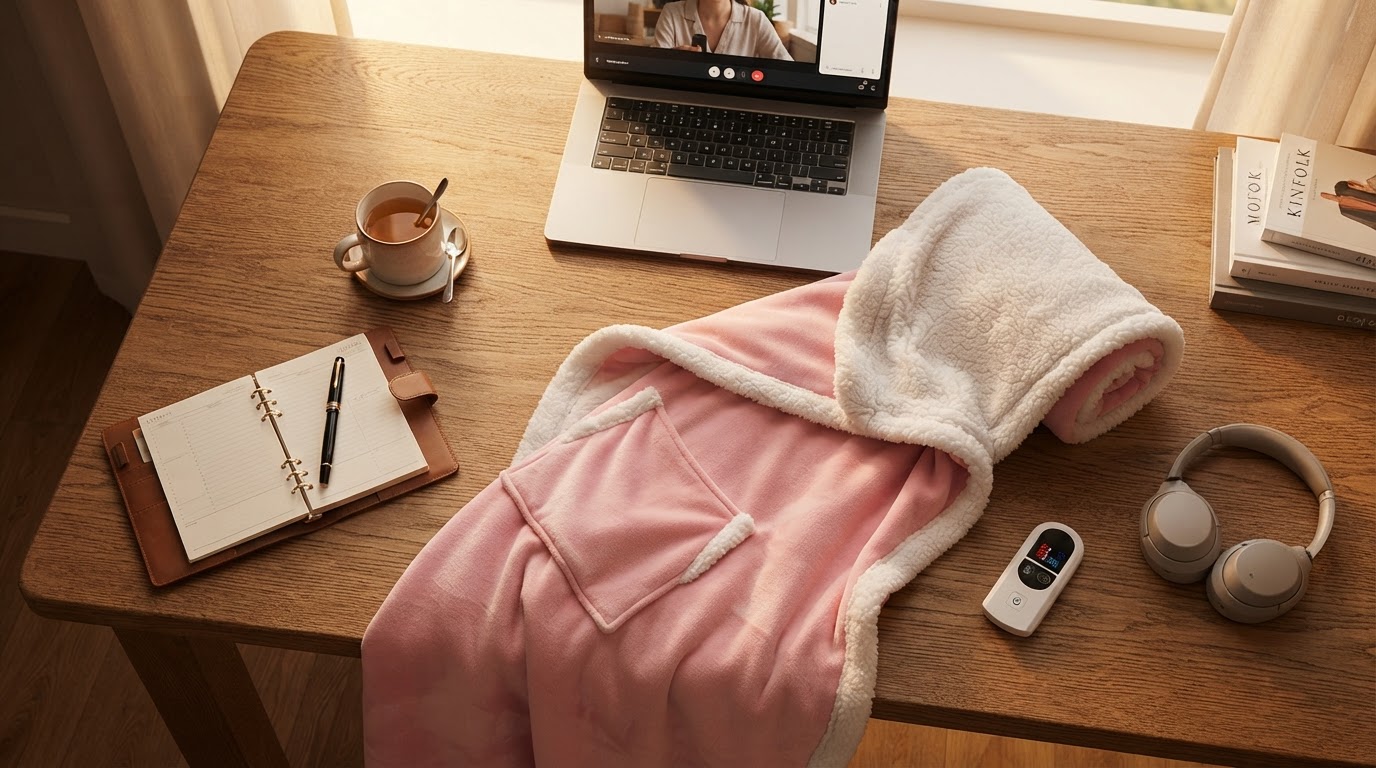
How Heated Blanket Wrap Improves Remote Work Comfort
 Daniel OkaforField Tester
October 8, 2026. This evaluation explores the practical utility of a wearable heated blanket for professionals managing cold workspaces. It is intended for consumers seeking targeted thermal regulation without sacrificing the mobility required for daily tasks.
The Challenge of Maintaining Core Temperature at a Desk
I tested this for three weeks in a basement office where the ambient temperature rarely rises above 62 degrees. The primary struggle with traditional heating methods is the trade-off between warmth and utility. Standard space heaters often create uneven hotspots, warming the shins while leaving the upper body exposed to drafts. According to energy efficiency data provided by the Department of Energy, localized heating—or personal thermal management—is significantly more cost-effective than attempting to raise the temperature of an entire room, especially in drafty older buildings. However, the physical mechanics of sitting for eight hours creates a specific circulation challenge. When the body is stationary, blood flow to the extremities decreases, making the torso's core temperature critical for overall comfort. During my initial week of testing, I found that standard blankets frequently slipped off my shoulders when I reached for a mouse or keyboard. This constant readjustment interrupted my workflow and led to a cycle of cooling down and warming back up that made it difficult to focus on complex coding tasks. The need for a stable, hands-free heat source became evident by day two, as I struggled to balance a traditional throw while typing.
Performance of the Heated Blanket Wrap in Motion
What surprised me: the transition from a standard throw to the Heated Blanket Wrap felt less like adding a garment and more like wearing a lightweight shell. Unlike the electric throw blanket with sleeves, which can sometimes feel cumbersome due to the extra fabric around the forearms, this wrap design focuses heat specifically across the upper back and shoulders. I noticed that the weight distribution is centered, preventing the heating elements from pulling against the neck. I spent several days alternating between this and an electric shawl with heat to see which allowed for better range of motion. The wrap proved superior for tasks involving heavy typing or reaching across a large desk surface. Day three is where I noticed the specific benefit of the integrated fastening system; it stayed secure even when I stood up to take a call or walked to the kitchen for coffee. The USB connectivity also allowed for a seamless transition to the car for afternoon errands, which aligns with the growing interest in a usb heated blanket for car use. While some users might prefer the full-body coverage of a heated poncho for women, the wrap provides a more professional silhouette for video conferences while maintaining high thermal output. I found that the heat levels remained consistent throughout four-hour sessions, avoiding the automatic shut-off frustrations I have experienced with lower-quality heating pads. Here's the moment it earned its place: I was able to lower my home thermostat by four degrees without feeling the typical afternoon chill that usually ends my productivity.
Selecting the Right Wearable Heating Solution
When choosing a wearable heated blanket, the decision usually comes down to the specific environment you inhabit most frequently. If you are primarily stationary, a heavier weight might be acceptable, but for those of us who move between a desk, a sofa, and a vehicle, the portability of the Heated Blanket Wrap is the deciding factor. What I’d do differently if I were buying again is pay closer attention to the cable length; while the USB option is great for portability, having a dedicated extension cord for the desk makes a significant difference in comfort. You want to ensure the power source doesn't tug when you rotate your chair. This is a common point of discussion in Reddit threads regarding the wearable electric blanket, where users often debate the merits of battery packs versus wall plugs. For a home office, the wall plug offers more sustained high heat, whereas the battery is essential for the car.
Before finalizing a purchase, consider this checklist to ensure the device meets your specific ergonomic needs:
- Verify the placement of heating elements to ensure they cover the upper traps and mid-back.
- Check for a secure fastening mechanism (buttons or clips) to prevent the wrap from sliding during movement.
- Confirm the fabric is machine washable, as daily use in an office setting will necessitate regular cleaning.
- Ensure the power cord is at least six feet long or compatible with standard USB extensions.
- Evaluate the weight of the wrap to ensure it does not cause neck strain during long-term wear.