Managing Chronic Pain with a Heated Blanket Wrap
 Sam VasquezBuying Guide Lead
October 20, 2026. This guide examines how wearable electric heat helps manage persistent muscle and joint discomfort. It is written for individuals seeking consistent, hands-free relief for chronic conditions.
The Limitations of Traditional Heat Therapy for Chronic Pain
Chronic pain management requires more than a temporary fix; it requires sustained, therapeutic warmth that doesn't tether you to a single spot for twenty minutes. When I look at the landscape of heat therapy, I see a lot of products that work well for ten minutes but fail for the other twenty-three hours of the day. According to Healthline, some reusable gel packs heat up in just three seconds, but the heat only lasts about 10 to 15 minutes. While that is fine for a quick shock to a strained muscle, it does very little for someone dealing with fibromyalgia or chronic lower back stiffness that persists throughout a workday.
Another common alternative is the chemical adhesive patch. ThermaCare HeatWraps are popular because they stay warm for eight hours and are highly portable, making them a decent choice for menstrual pain or office use without carrying a cord. However, the recurring cost of disposables adds up quickly if you need relief every day. Furthermore, chemical wraps lack adjustable temperature settings. If the patch is too hot, your only option is to remove it. For those who need specific, localized warmth, like a heated lap blanket for wheelchair users, a disposable patch simply doesn't cover enough surface area to be effective. We also have to consider depth of penetration. In a video by Ask Doctor Jo, it is noted that far infrared heat therapy can be superior to regular heating pads because it penetrates deeper into the muscles. While infrared is excellent, those devices are often rigid and expensive, making them less practical for relaxing on a sofa compared to a soft, wearable fabric.
How the Heated Blanket Wrap Addresses Chronic Needs
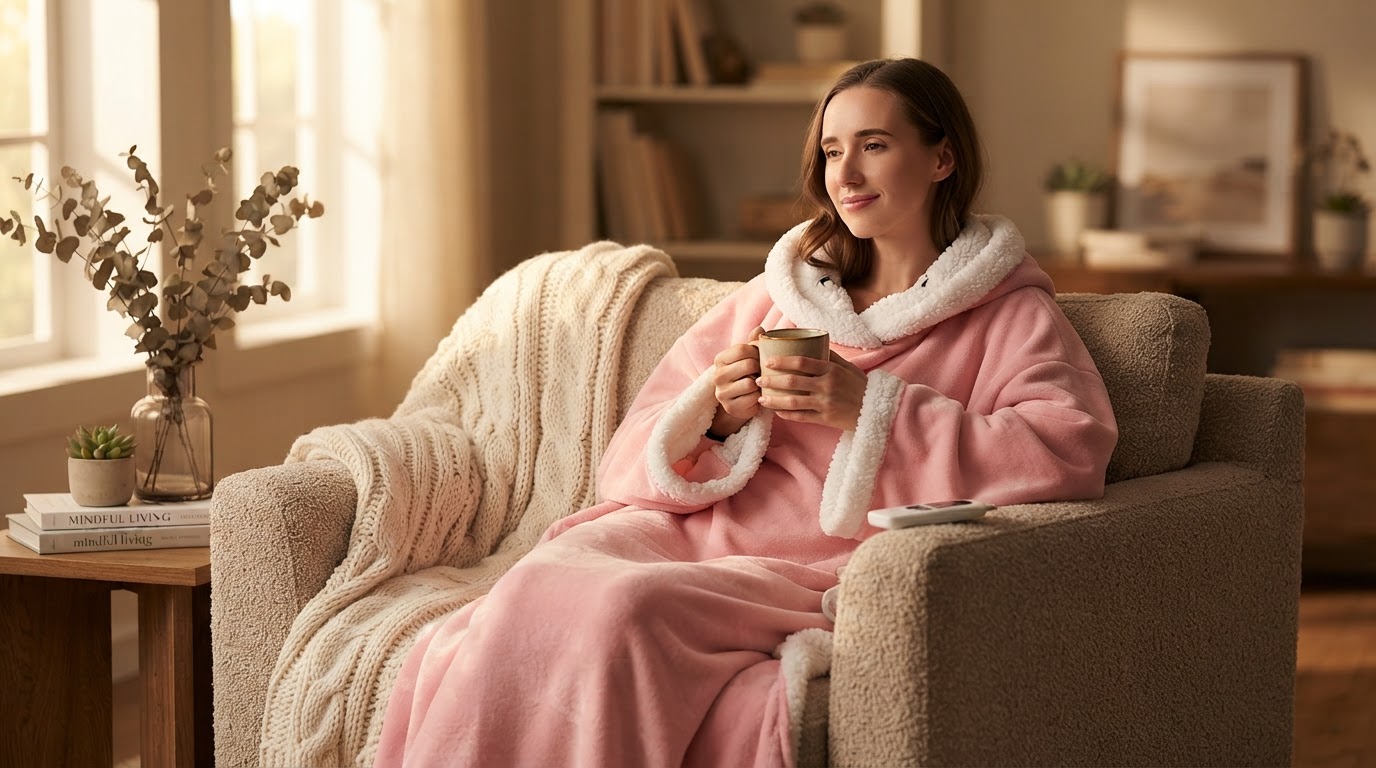
The Heated Blanket Wrap fills the gap between the short-lived heat of a gel pack and the high cost of specialized infrared equipment. Unlike a standard heating pad that you have to lean against—often causing poor posture just to keep the heat in place—this wearable design functions as an electric poncho blanket. This is a specific category that has seen significant interest recently, with thousands of people searching for "electric poncho" solutions to stay mobile while managing discomfort. The wrap design ensures that the heating elements stay flush against the upper back, shoulders, and neck without requiring the user to hold it there.
For many, especially those looking for a heated blanket for elderly at home, the weight and fit are just as important as the temperature. A wearable wrap stays secure even if the user is moving from the kitchen to the living room. Between the two most common designs—the shawl and the full-body wrap—I’d go with the full wrap if you have generalized pain, but a targeted shawl is better if your tension is strictly in the traps and neck. If you are shopping for a heated wearable blanket for elderly relatives, safety features like auto-shutoff are non-negotiable. The electric wrap provides a consistent level of warmth that chemical patches can't match, and unlike the gel packs mentioned by Healthline, the heat doesn't dissipate after fifteen minutes. It stays at the exact degree you set for as long as you need it. Skip this if you only experience pain once a month; a simple microwavable bag is cheaper and sufficient for occasional use. But for daily management, the utility of a wearable electric version is hard to beat.
Selecting the Right Wrap for Your Pain Profile
Choosing a device depends entirely on where your pain lives and how you spend your day. If you spend eight hours at a desk, a USB-powered wrap is a strong contender because it can plug directly into a computer or a portable power bank, allowing you to move around the office without unplugging. However, USB wraps generally don't get as hot as wall-plug models. If you need intense heat to break through deep muscle knots, you need a standard AC-powered wrap.
Here’s what I’d actually buy: a model with at least three heat settings and a plush, machine-washable cover. Chronic pain management is a long-term commitment, and the fabric will eventually need cleaning. If you're on a budget, look for the basic electric shawl designs that focus on the upper back; they are usually more affordable than the full-body wearable ponchos but provide the same relief for the most common tension areas. When evaluating your options, use this checklist to ensure the wrap meets the demands of chronic use:
- Coverage Area: Does the heat reach your specific trigger points (e.g., lower lumbar vs. cervical spine)?
- Mobility: Can you wear it while performing daily tasks, or does it slip off your shoulders?
- Heat Consistency: Does it offer multiple levels to account for "flares" versus maintenance days?
- Safety Timers: Does it have an automatic shut-off to prevent skin irritation during long sessions?
- Power Source: Is the cord long enough for your favorite chair, or do you need a USB-compatible version for car and office use?
Finding the right balance between mobility and heat intensity is the key to managing chronic discomfort effectively. Shop Heated Blanket Wrap here.
Sources
- The 10 Best Heating Pads of 2026 for Back Pain, Cramps, and ... - HEALTH
- ThermaCare HeatWraps relieve pain with therapeutic heat
- 7 Best Heating Pads for Chronic Pain and Tense Muscles - Healthline